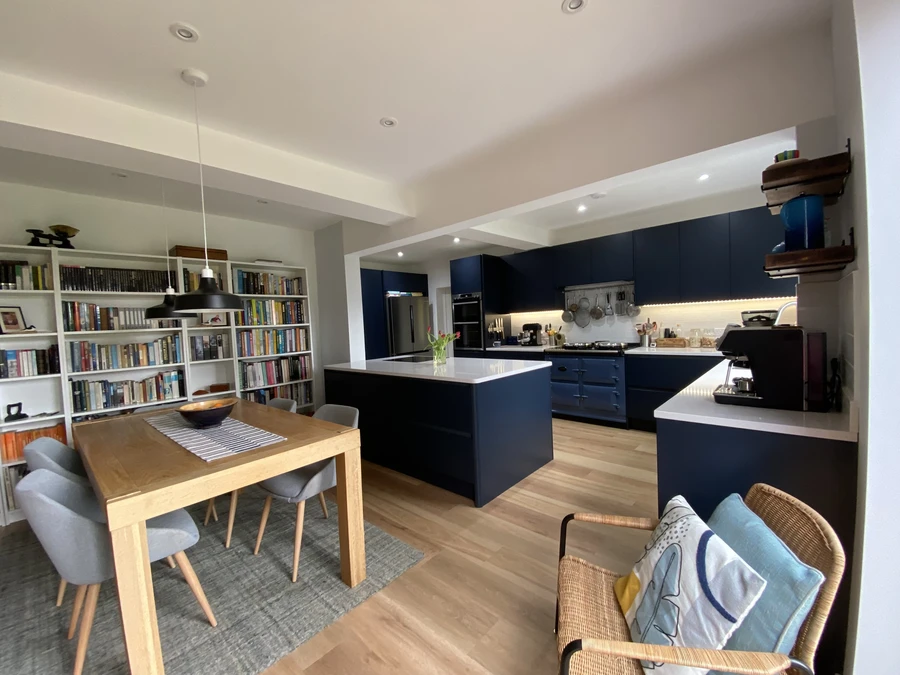
Designing Kitchen Storage Around Real Life
Plan storage around what you own, how you cook and the way you live
Guide 4 of the NMB Kitchen Renovation Academy
Kitchen Storage Ideas
Good kitchen storage ideas aren’t simply about adding more cupboards. A well-designed kitchen needs the right storage in the right places.
In this guide, we’ll show you how we plan cupboards, drawers, appliances and everyday essentials around what you actually own, how you cook and the way your household uses the kitchen.
You’ll learn:
- How To Carry Out A Simple Kitchen Storage Audit
- Why Storage Should Follow Your Daily Routines
- Where Everyday Appliances Should Live
- When Drawers Work Better Than Cupboards
- How To Create Calmer, Clutter-Free Worktops
- Which Specialist Storage Solutions Are Genuinely Worthwhile
- How To Future Proof Your Kitchen Storage
Contents Of Our Guide
2. The Kitchen Storage Audit
3. Give Everything A Home
4. Store Things Where You Use Them
5. Everyday Appliances Need a Plan
6. Clear Worktops Without Hiding Your Life
7. Drawers or Cupboards?
8. Pantry Storage: Bigger Is Not Always Better
9. Clever Storage Is Not Always Clever
10. Do Not Forget The Things Nobody Photographs
11. Storage Should Change With Your Family
12. The NMB Kitchen Storage Checklist
13. Before You Sign Off Your Storage Plan
14. Looking Ahead
15. NMB Handbook Guides
1. Start With What You Need To Store
One of the biggest kitchen planning mistakes happens long before the cabinets are ordered: underestimating how much you actually need to store.
It is easy to picture new worktops, cabinet colours and appliances. It is much harder to remember everything currently hiding inside drawers, cupboards and utility rooms. There is usually far more than you think.
Once you start listing what you actually own, the amount and type of storage your new kitchen needs becomes much clearer.
- Air fryers and slow cookers
- Coffee machines and kettles
- Blenders, juicers and food processors
- Baking trays and mixing bowls
- Pots, pans and serving dishes
- Lunch boxes and food containers
- Spices, oils and baking ingredients
- Water bottles and bulk shopping
- Cleaning products
- Pet food and supplies
- BBQ equipment
- Seasonal appliances
NMB Designer's Tip
Before thinking about clever storage accessories, work out what actually needs storing.
Designing a beautiful pantry is pointless if the appliance you use every morning still ends up living on the worktop.
2. The Kitchen Storage Audit
Before designing your new kitchen, spend an hour going through the one you already have. Open every cupboard and drawer, check the utility room, look on top of cupboards and inside rarely used cabinets. Then divide what you find into four groups:
Anything in the final group is worth questioning before you design expensive storage around it. A new kitchen is also an opportunity to clear out duplicate utensils, expired food, unused gadgets and items that have simply accumulated over the years.
Use Every Day

Use Once a Week

Use Occasionally

Rarely Used

NMB Designer's Tip
Do not design your new kitchen around clutter you do not actually want to keep.
Declutter first. Design second.
3. Give Everything A Home
The most successful kitchens do not simply have lots of storage. They have the right storage in the right places.
Once we understand what needs storing, the next step is to understand how you use it. Instead of asking, “How many cupboards can we fit?”, we ask questions such as:
- Where do you make your morning coffee?
- Where do you unpack the shopping?
- Which appliances do you use every day?
- Do you cook mainly from scratch?
- Do you bake or batch cook regularly?
- Do children make their own breakfast or snacks?
- Do you buy food, drinks or pet supplies in bulk?
Your answers tell us not only how much storage you need, but where that storage should be.
4. Store Things Where You Use Them
Think about making your morning coffee. You may need:
- Mugs
- Coffee or Tea
- Kettle or coffee machine
- Sugar
- Spoons
- Milk
- Bin
If these are scattered around the kitchen, you repeat unnecessary movements every morning. Keep them together and you have created a simple coffee zone. The same principle applies throughout the kitchen.
Cooking zone
Pans, utensils, oils and spices positioned close to the hob.
Preparation zone
Knives, chopping boards, mixing bowls and preparation tools close to your main worktop.
Cleaning zone
Dishwasher, bin, cleaning products and everyday crockery positioned together so clearing away feels natural.
A well-planned kitchen reduces unnecessary movement by keeping the things you use close to where you need them.
5. Everyday Appliances Need a Plan
Modern kitchens contain far more small appliances than they did twenty years ago. The question isn’t simply whether you own an air fryer or coffee machine. It is where it should live.
Leave out
For appliances used every day that you're happy to have on display.
Hide but keep accessible
For air fryers, coffee machines, toasters and mixers used regularly but not necessarily wanted permanently on the worktop.
Store away
For occasional or seasonal appliances that don't need valuable everyday kitchen space.
Where an appliance will live can affect the kitchen design itself. Power sockets, ventilation, shelf heights, door mechanisms and the space needed to use an appliance safely should all be considered before the cabinetry is ordered.
Kitchen Pantry Storage

Frequently used appliances can remain accessible without permanently occupying the worktop
6. Clear Worktops Without Hiding Your Life
A clutter-free kitchen does not mean everything has to be hidden away. It means the things you use regularly have somewhere sensible to live.
Breakfast cupboards, appliance garages and pocket-door units can keep frequently used appliances accessible — and sometimes permanently plugged in — while allowing them to disappear from view when they are not being used.
They can work particularly well for:
- Coffee machines
- Toasters
- Air fryers
- Blenders / juicers
- Breakfast cereals
- Tea and coffee
- Everyday mugs and glasses
NMB Designer's Tip
Do not add a breakfast cupboard simply because you have seen one online. They take up valuable cabinet space.
First decide what will actually live inside it — and whether you will use it every day.
7. Drawers or Cupboards?
For many everyday items, deep drawers are one of the biggest improvements you can make to a kitchen. Instead of crouching down and reaching into the back of a base cupboard, a drawer brings everything out to you.
Drawers work particularly well for:
- Pots and pans
- Plates and bowls
- Food containers
- Baking equipment
- Dry ingredients
- Cutlery and utensils
Cupboards still work well for:
- Tall appliances
- Large mixing bowls
- Occasional equipment
- Awkwardly shaped items
- Seasonal cookware
The answer is not drawers or cupboards. A well-designed kitchen usually uses both — each where it works best.
NMB Designer's Tip
Prime storage should be given to the things you use most.
Do not give one of the easiest-to-reach cupboards in your kitchen to something you use twice a year.
Kitchen Storage Solutions

Want to explore the different options available? See our kitchen storage solutions, including pull-out larders, drawer organisers and specialist internal storage.
8. Pantry Storage: Bigger Is Not Always Better
A pantry can be fantastic, but size alone doesn’t make it useful. A narrow, well-organised pantry close to where groceries are unpacked can work better than a huge cupboard at the opposite end of the kitchen.
The important question is not “How big can the pantry be?” but “What actually needs to live in it?”
- Tinned & packet foods
- Pasta & rice
- Cereals
- Baking ingredients
- Snacks
- Bottled drinks
- Pet food
- Bulk purchases
NMB Designer's Tip
Shelf depth matters too. Very deep shelves can make smaller items difficult to see and encourage food to disappear at the back. Sometimes shallower, more accessible storage is the better solution.
The design should follow the contents — not the other way around.
9. Clever Storage Is Not Always Clever
There are now specialist storage solutions for almost every part of a kitchen. Pull-out larders, corner systems, carousel units, pull-down shelves and internal organisers can all be useful. But adding more mechanisms does not automatically create a better kitchen.
They take up space themselves, add cost and introduce more moving parts. Sometimes the simplest solution is the best one. And sometimes a cabinet designed specifically around an awkward space will outperform an expensive accessory.
NMB Designer's Tip
Never pay for clever storage simply because it looks impressive in a showroom.
Ask one question: “What problem does this solve in my kitchen?”
If there is no good answer, you probably do not need it.
Planning Your Own Kitchen?
Good storage starts with understanding what needs to fit, where it should live and how you use your kitchen every day.
During your free design visit, we can look at your space, discuss how you use your kitchen and help plan storage around your home and everyday routines.
10. Do Not Forget The Things Nobody Photographs
Beautiful kitchen photographs rarely show the everyday things every home still needs somewhere to store:
- Bins and recycling
- Vacuum cleaners
- Mops & buckets
- Ironing boards
- Cleaning products
- Pet food
- Carrier bags
- Bulk toilet rolls & kitchen rolls
- Laundry products
- Step stool or folding ladder
But these everyday essentials still need a home. If you have a utility room, some can be stored outside the kitchen. If you don’t, they need to be considered during the design rather than squeezed in after the cabinets arrive.
11. Storage Should Change With Your Family
The things you need to store today may not be the things your kitchen needs to accommodate five or ten years from now.
- Children grow up
- Cooking habits change
- New appliances appear
- Hobbies come and go
- Accessibility needs can change
Where possible, we favour storage that can adapt with you rather than designing every centimetre around one very specific moment in your life.
NMB Designer's Tip
Avoid making every cupboard too specialised. Flexible shelves, adjustable interiors and versatile drawers are often easier to adapt as your needs change.
If you’re also thinking about how your kitchen needs may change over time, read Guide 3: Kitchen Layout Ideas.
Planning Your Bins & Recycling?

Integrated bins can keep general waste, recycling and food waste organised without taking up floor space. Planning where your bins and recycling will live? Explore our integrated kitchen waste management options.
12. The NMB Kitchen Storage Checklist
Before your kitchen design begins, use this checklist to make a note of the things your new kitchen may need to accommodate. Tick the items you currently store and add anything we’ve missed that is specific to your household.
Small appliances
☐ Air fryer
☐ Slow cooker
☐ Coffee machine
☐ Toaster
☐ Blender / juicer
☐ Stand mixer
☐ Food processor
Cooking and eating
☐ Pots and pans
☐ Baking trays
☐ Chopping boards
☐ Serving dishes
☐ Glassware
☐ Food containers
☐ Spices, oils and dry goods
Household
☐ Cleaning products
☐ Recycling
☐ Vacuum cleaner
☐ Mop and bucket
☐ Ironing board
Real-life essentials
☐ Packed lunch items
☐ Pet supplies
☐ Bulk shopping
☐ BBQ equipment
☐ Seasonal appliances
Do not worry about deciding where everything should go yet. The purpose of the audit is simply to make sure nothing gets forgotten before the design begins.
NMB Designer's Tip
Photograph the inside of your cupboards and drawers before your kitchen design appointment.
It is surprisingly useful. We can learn a great deal about the storage you need simply by seeing what you’re currently trying to fit into your kitchen.
13. Before You Sign Off Your Storage Plan
- Does everything you use every day have an obvious home?
- Are frequently used items easy to reach?
- Are cooking essentials stored close to where they’ll be used?
- Have all your everyday appliances been accounted for?
- Is there somewhere practical for bins and recycling?
- Have you planned for bulk shopping and pet supplies?
- Are your worktops likely to remain reasonably clear?
- Is some of your storage flexible enough to adapt in the future?
If you’re struggling to decide where something will live now, it probably won’t become any easier once the kitchen is installed.
Looking Ahead
Congratulations — you have now completed Guide 4 of the NMB Kitchen Renovation Academy.
Once you’ve worked out what needs to be stored and where it should live, the next stage is to look more closely at the appliances your kitchen needs to accommodate.
In Guide 5, we’ll look at choosing and positioning kitchen appliances — what should be decided early, which measurements matter and how your appliance choices can influence the entire kitchen design.
Written by:
Nevin Smith: Kitchen Designer & Director
NMB Kitchens & Bathrooms Ltd.
20+ years of renovation and construction experience, specialising in structural kitchen renovations, open-plan living and fully managed kitchen installations across Greater Manchester.
──── ♦ ────
Coming Next — Guide 5: Choosing & Planning Your Kitchen Appliances
Appliances should be considered much earlier than many homeowners realise. Their sizes, positions, power requirements, ventilation and even the way their doors open can affect the kitchen around them.
- Continue to Guide 5: Choosing & Planning Your Kitchen Appliances
NMB Handbook Guides
✓ Guide 1 – Planning a New Kitchen
✓ Guide 2 – Setting a Realistic Kitchen Budget
✓ Guide 3 – Kitchen Layout Ideas
✓ Guide 4 – Designing Kitchen Storage Around Real Life
○ Guide 5 – Choosing & Planning Your Kitchen Appliances (Coming Soon)
○ Guide 6 – Choosing Kitchen Cabinets & Doors (Coming Soon)
○ Guide 7 – Choosing the Right Kitchen Worktops (Coming Soon)
○ Guide 8 – Kitchen Lighting & Electrical Planning (Coming Soon)
○ Guide 9 – Choosing the Right Kitchen Company (Coming Soon)
○ Guide 10 – Preparing for Your Kitchen Installation (Coming Soon)
──── ♦ ────
Ready To Start Planning?
If you would like professional advice tailored to your home, we are always happy to help. Every project begins with a friendly design consultation where we will discuss your ideas. Answer your questions and provide honest guidance with no pressure or obligation.
We - Design, Supply & Install
Why Not Explore Our Recent Projects