

Waste Management Systems for Modern Kitchens
Smart Waste Management for a Smarter Kitchen
A well-designed kitchen isn’t just about beautiful cabinets and worktops. It is also about the practical details that make everyday life easier. One of the most important considerations is how you manage waste and recycling.
Not everyone wants to see freestanding bins or recycling tubs on display in their kitchen. So with today’s focus on sustainability, it is important to make recycling effortless in your home.
Integrated bin systems allow you to dispose of rubbish most efficiently while blending seamlessly into your overall kitchen design.
Waste management doesn’t have to be obvious. Instead, it becomes a hidden feature that keeps your kitchen organised, hygienic, and environmentally friendly.
On this page, we’ll explore the three main types of integrated kitchen bins to help you choose the perfect solution for your space.
Explore our waste management ideas, finish options below. Or get in touch with our design team for a free consultation.
Why Choose an Integrated Kitchen Bin?
Hygienic – lids and compartments keep smells contained.
Discreet – no freestanding bins taking up valuable floor space.
Organised – separate sections for general waste, recycling, and food waste.
Stylish – seamless design that complements the rest of your kitchen.
By hiding waste behind a cabinet door, you keep your kitchen looking sleek while still making rubbish disposal effortless.
A modern kitchen should be as practical as it is stylish.
These bins are discreetly built into your cabinetry and offer a clever solution. They keep waste and recycling hidden from view while making everyday life easier.
From compact pull-out bins to larger recycling systems, we design storage that suits the way you live.
Our kitchens feature a full range of smart storage ideas. Such as cutlery dividers and pull-out larders to concealed drawers that maximise every inch of space.
No more cluttered worktops or awkward cupboards; everything has its place, neatly tucked away yet always close at hand.
With an integrated kitchen bin and custom storage, you have a kitchen that functions well inside and looks great outside.
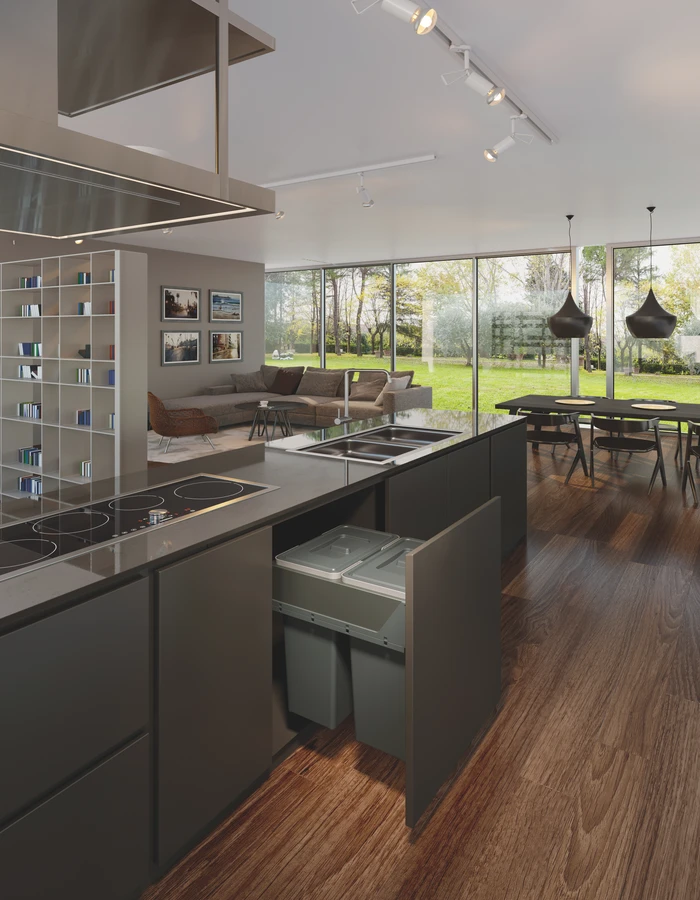
Why Integrate Your Bins?
Hygiene, odour control, aesthetic, space saving.
Types of In-Cupboard Bin Systems
Option 1) Pull-Out Bins - Option 2) Hinged Door / Swing Bins - Option 3) Drawer Base Bins - Option 4) Multi-Compartment Recycling Systems - Option 5) Food Waste / Compost Bins.
What to Consider Before Choosing
Cabinet internal dimensions - Lid clearance & access - Number of compartments needed - Odour control / ventilation - Cleaning & maintenance.
Tips for Installation & Use
Soft close rails, quality hardware - Selecting materials that resist staining or smells - Liner options, how to clean.
Rubbish never looked so tidy – it’s bin handled!
In-Cupboard Bin Options: Which One’s Right for You?
A tidy kitchen is not just about what you see—it’s also about what you don’t. In-cupboard bins offer ingenious storage solutions, hiding waste and recycling out of sight while keeping it completely accessible. If you are replacing your kitchen or designing a new one, knowing the key styles and features will help.
This knowledge will guide you in choosing the option that best fits your space and habits.
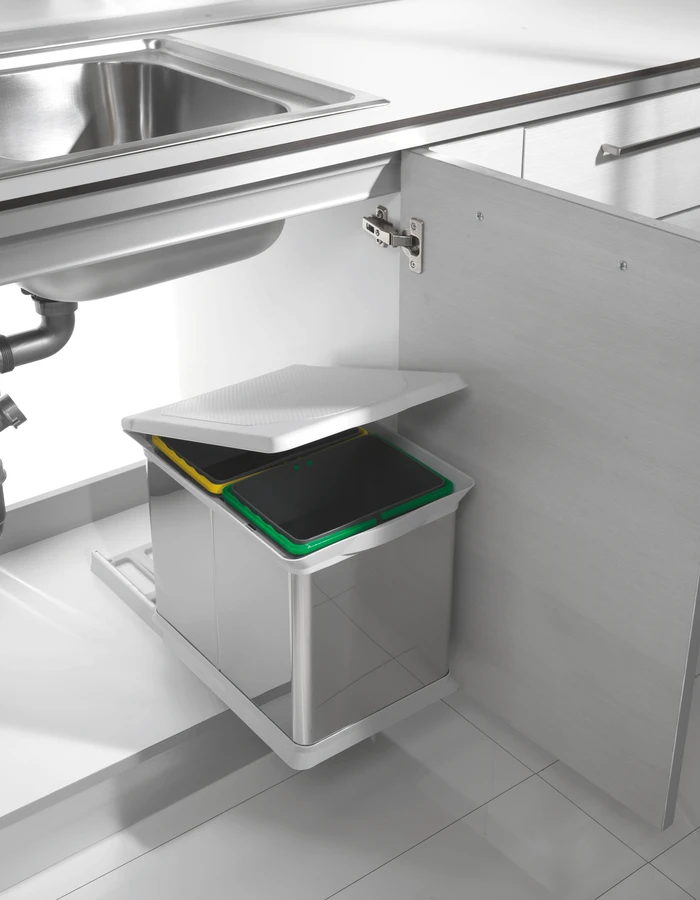
Waste Management
Waste Management Systems for Kitchen Cabinets: The Benefits of Pull-Out Bins
One essential feature that improves your kitchen’s functionality is a well-designed waste management system. Pull-out bins are a perfect solution, combining practicality with sleek design.
Pull-out bins integrate seamlessly into kitchen cabinets, keeping waste and recycling neatly tucked away yet easily accessible.
These systems come in different types to meet your needs. You can choose single bins or double compartments for recycling.
There are also multi-section setups for more advanced waste sorting.
The discreet design enhances your kitchen’s aesthetics by eliminating the need for visible, free-standing bins.
Beyond their tidy appearance, pull-out bins improve hygiene. Positioned directly under your worktop, they allow you to dispose of food waste without carrying scraps across the room.
Many systems also include soft-close mechanisms and odour-sealing lids for added convenience and cleanliness.
Pull Out Bins
Types of In-Cupboard Bin Systems
1. Pull-Out Bins
The most popular option, pull-out bins are mounted on runners so the entire unit slides out smoothly when you open the door. Many feature soft-close technology for quiet, effortless use.
Best For: medium to large households.
Typical Size: fits 500–600mm cabinets.
Advantages: large capacity, easy access, premium feel.
Things To Check: cabinet width and depth for a perfect fit.
Waste Management: Pull-Out Door Cabinets
These are among the most popular of in-cupboard bin styles. A pull-out bin swings out with the cabinet door, often mounted on runners so you can drag the whole unit out for access. They are perfect where you want maximum capacity, cleanliness, and ease of use.
Pros:
Larger capacity: Pull-outs offer more litres (often 30-100+), even with multiple compartments.
Soft-close runners: Less noise, smoother use.
Hidden away entirely: When closed, nothing is visible—so aesthetics are preserved.
Considerations:
Precise measurements: You need to know internal width, depth, and height of the cabinet. If the unit doesn’t fit, it won’t slide smoothly.
Installation skill: Aligning runners, securing the bin, ensuring smooth movement takes care.
Ideal if you have a reasonably wide cabinet (e.g. 500-600mm) and want full-height storage.
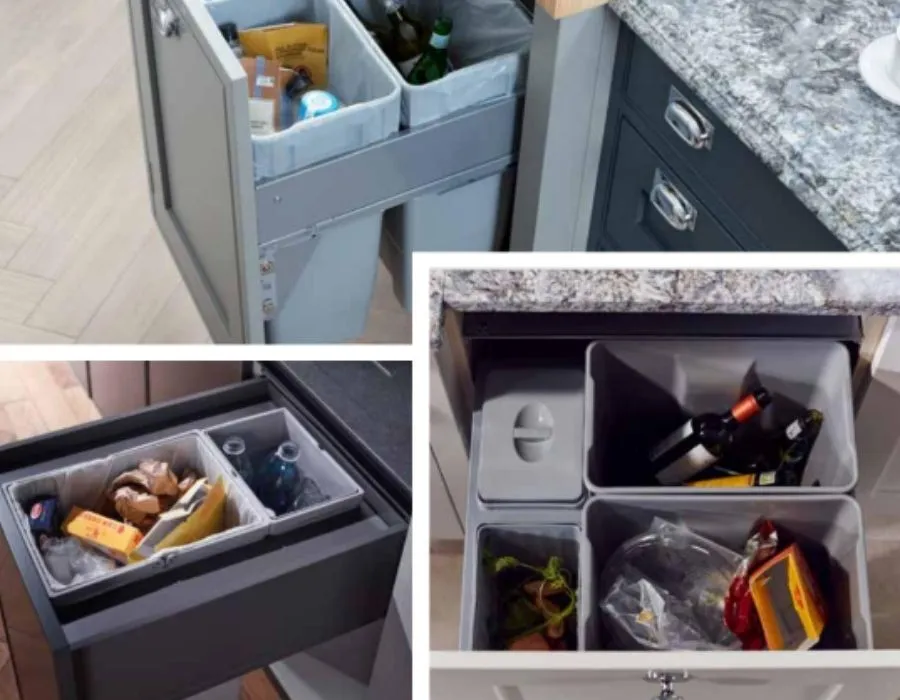
Hindged Door Cabinets
Types of In-Cupboard Bin Systems
2. Hinged Door Cabinets
Bins that are designed for hinged door cabinets are typically supplied as free-standing units. They can be quickly secured to the cabinet floor with just a few screws. For those who prefer a more integrated solution, there are also models that attach directly to the cabinet door. These usually come as modular kits which require a small amount of assembly. However, they offer the advantage of opening and closing in sync with the door for added convenience.
Best For: medium to large households.
Typical Sizes: Fits 300–400–450–500–600 mm hinged cabinets.
Advantages: medium capacity, easy access, opens with the door.
Things To Check: Compare the product dimensions to the space inside the cupboard when considering this type of fit.
Waste Management: Hinged Door Cabinets
Here the bin(s) sit inside a cabinet with a standard hinged door. Some models have swing-out bins that pivot on the door, others are free standing on the base of the cabinet, sometimes attached to the back or floor.
Pros:
Easier retrofit: Usually simpler to install in existing cabinets.
Versatility: You can often place them off-centre, or alongside other storage items.
Smaller sizes available: Good for tighter spaces or smaller households.
Considerations:
Lid clearance: Height must allow the bin lid to open without hitting hinges or shelf.
Access effort: Might not be as smooth or ergonomic as pull-out for some users—having to lean in, open lid, etc.
Great choice if your space is more restricted or if you prefer fewer modifications.
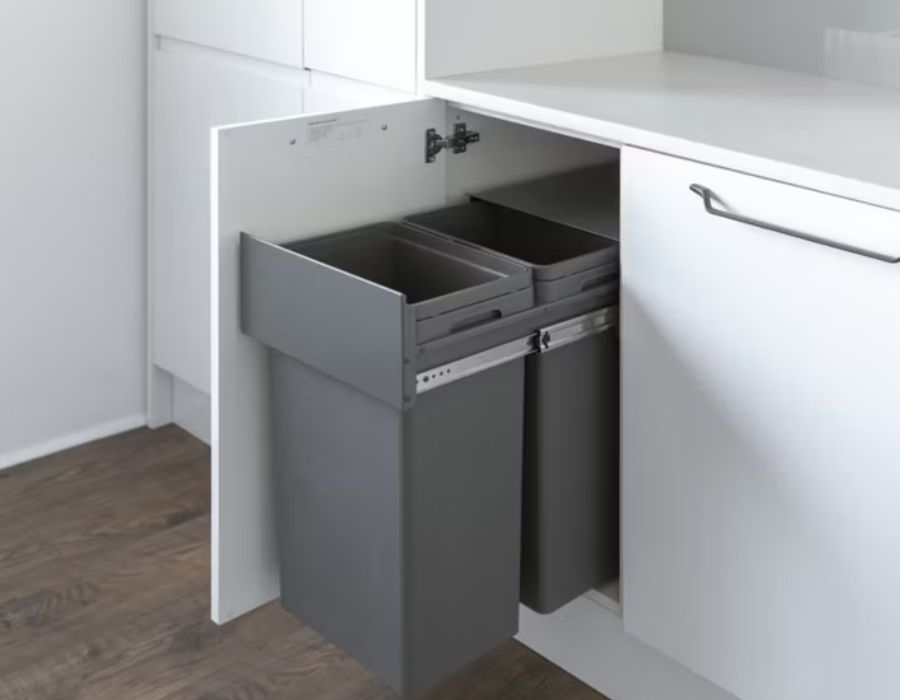
Pan Drawers
Types of In-Cupboard Bin Systems
3. Pan Drawers
Pan drawers have become a hallmark of modern kitchen design, offering both style and practicality. There is a range of bin systems specifically designed to fit seamlessly into these drawers. There are many options available for units from 600mm up to 1200mm in width.
Best For: medium to large households.
Typical Size: Fits 600 mm -1200 mm wide
Advantages: Sleek and modern feel.
Things To Check: You will need to check both internal and external measurements of the drawer. As with some kitchen manufacturers, the inside walls can be straight or sloping.
Waste Management: Pan / Drawer Bins
These are bins built into wide drawers or pan drawers. The bin unit sits in the base of the drawer, possibly on a tray, sometimes with multiple compartments for recycling and waste.
Pros:
Clean look: Very sleek and minimal when closed—just a drawer front.
Multiple compartments: Useful for separating recycling, food waste, general waste.
Good use of space: If you have large drawers, this option transforms under-used drawer bottoms into functional waste storage.
Considerations:
Height limit: Drawer depth and side wall height restrict how tall/wide the bin can be.
Lid/opening: Some bins need the drawer to be opened fully to access lids—check ease of use.
Tray-fit: Some tray-bases can be trimmed or adjusted, others are fixed—so measure carefully.
Best suited for wide drawer units (≥600mm) and when you want your kitchen interior to feel ultra-refined.
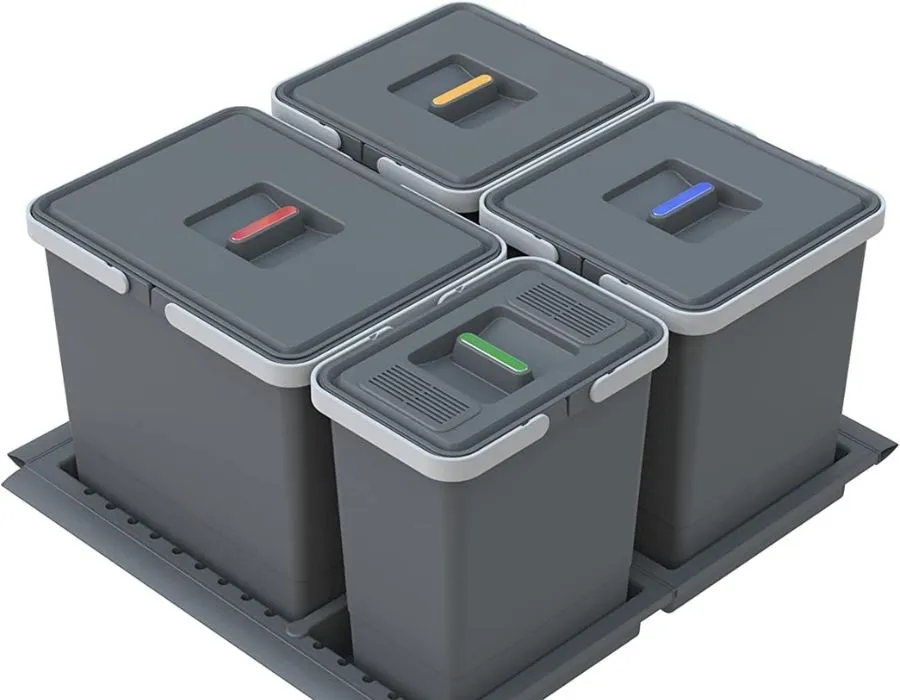
Key Questions to Ask Before Choosing Your In Cupboard Bins
To make sure your bin works well, here are three must-know measurements & decisions:
Space size – internal width, height, and depth of the cabinet or drawer.
How you recycle – how many compartments you need (one, two, three, even four), depending on your waste streams (general waste, recycling, food waste, etc.).
Lid & access – will the lid open freely? Do you want soft-close or hands-free options? How much bending or reaching is involved?
Final Thoughts
An in-cupboard bin is one of those smart upgrades that pays dividends every day. It keeps your kitchen looking clean, frees up cupboard floor space, and makes it easier to manage recycling without trips to the outside bin.
If we had to sum up:
Choose pull-out if you want maximum capacity and a premium feel.
Use hinged if you want something simple and less intrusive
Go drawer-based if you prioritise sleek appearance and clever multi-compartment organisation.
FAQ -Waste Management
ask us
anything
What types of kitchen bins can be integrated into my cabinets?
There are several options available, including bins for hinged door cabinets, pull-out pan drawer bins, and multi-compartment recycling bins. Most are designed to be discreet, keeping your kitchen tidy while making waste separation simple.
How do bins for hinged door cabinets work?
Most bins for hinged door cabinets are free-standing units that fix directly to the cabinet floor. They are quick to install and easy to use. Some models also attach to the cabinet door so the bin slides out automatically when the door is opened.
Can I fit integrated bins into pan drawers?
Yes — pan drawers are becoming increasingly popular in modern kitchens, and there are bins specifically designed to fit inside them. These are available for drawers ranging from 600mm to 1200mm wide, making them suitable for a variety of kitchen layouts.
Are integrated bins easy to clean and maintain?
Definitely. Most designs feature removable inner containers, making emptying and cleaning straightforward. This ensures your waste solution stays hygienic and practical for everyday use.
Do integrated bins take up a lot of cabinet space?
Not necessarily. Many waste systems are designed to maximise capacity while still leaving space for other storage needs. During the design process, we’ll recommend the best option to suit your kitchen size and layout.
Book Your Free Home Consultation
Ready to find the perfect Waste Management for your Kitchen? Our expert team are happy to discuss your options to find the perfect fit for your kitchen and lifestyle.
Fill out the form below to schedule your complimentary consultation.
Prefer to speak with someone?
Call us on 07890 315540 — we’re here to help build the dream.