

Setting a Realistic Renovation Kitchen Budget
Spend Your Money Where It Matters Most
NMB Kitchen Renovation Academy: Guide 02 Setting A Realistic Kitchen Budget
Introduction
Kitchen Renovation Budget: One of the first questions homeowners ask when planning a new kitchen is:
“How much should I budget for my kitchen renovation?”
It’s a perfectly sensible question, but the answer is rarely as straightforward as people expect.
Every home is different. Every family has different priorities. And every renovation comes with its own opportunities and challenges. While two kitchens may look similar when they’re finished, the work required to achieve them can be very different.
At NMB Kitchens, we actually prefer not to begin by asking for your budget.
Instead, we start by understanding how you want your new kitchen to work. Who does most of the cooking? Is the space going to be used for entertaining? Or is it an area that you want the kids to use while preparing meals? Once we understand what matters to you, we can recommend the best way to spend your budget. This will help you get the best possible result.
A successful kitchen is not created by spending the most money. It is created by spending money in the right places.
This chapter will explain:
Where the cost of a kitchen renovation really goes.
Highlight the areas that often catch homeowners by surprise.
Share practical advice on where your budget will make the biggest difference.
“Spend wisely, not simply. A successful kitchen renovation isn’t measured by how much you spend. It’s measured by how well every pound is invested.”
We aim to help you plan with confidence and avoid unnecessary surprises. We will help steer you to make informed decisions so that you will be happy with it for many years to come.
About the Author: Nevin Smith
Kitchen Designer & Director, NMB Kitchens & Bathrooms Ltd. 20+ years of renovation and construction experience. Specialising in structural kitchen renovations, open-plan living and fully managed kitchen installations across Greater Manchester.
Contents Of Our Guide
- A Kitchen Budget Is More Than Just Cabinets
- Don’t Underestimate Hidden Costs
- What’s Hiding Behind Your Existing Kitchen?
- Spend Once. Enjoy Every Day
- How To Reduce Costs Without Reducing Quality
- Always Keep A Contingency Fund
- Kitchen Budget Checklist
- Every Home is Different
- Continue Your Kitchen Planning Journey
- Planning A Kitchen In Manchester?
- NMB Handbook Chapters Coming Soon
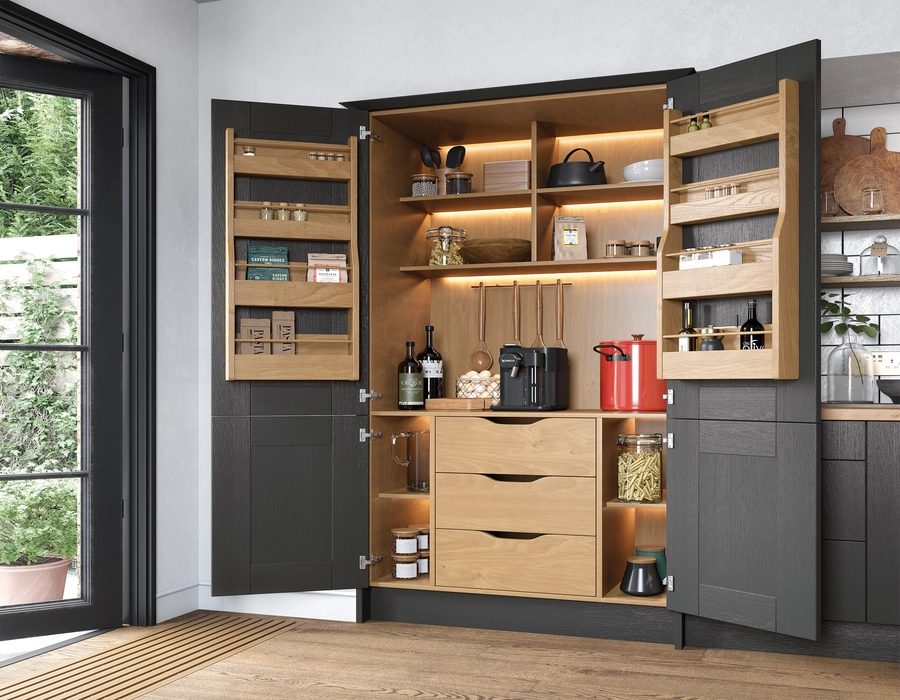
A Kitchen Renovation Budget Is More Than Just Cabinets
When most people begin budgeting for a new kitchen, they naturally focus on the kitchen itself. For example, the cabinets, doors, worktops and appliances. After all, these are the elements you can see, touch and compare relatively easily.
However, a successful kitchen renovation is rarely just about replacing cabinets.
Depending on your property’s age, your home’s layout, and the project’s scope, your investment may include more work. This can include structural changes, electrical upgrades, plumbing updates, plastering, flooring, and decorating. Other essential work may also be needed to complete the finished result.
This is why it’s often difficult to compare quotations based on price alone. Two kitchens may look almost identical when completed. However, one project may require significantly more building work while another simply replaces existing furniture within the same layout.
Understanding exactly where your kitchen renovation budget is being invested allows you to make informed decisions. It can help you prioritise the features that matter most and avoid surprises later in the project.
Before setting a kitchen renovation budget, it’s helpful to think of your renovation as a collection of individual projects. All working together, they create one finished kitchen. Breaking it down into smaller chunks often helps tackle these kinds of projects.
Where Does Your Kitchen Budget Go?
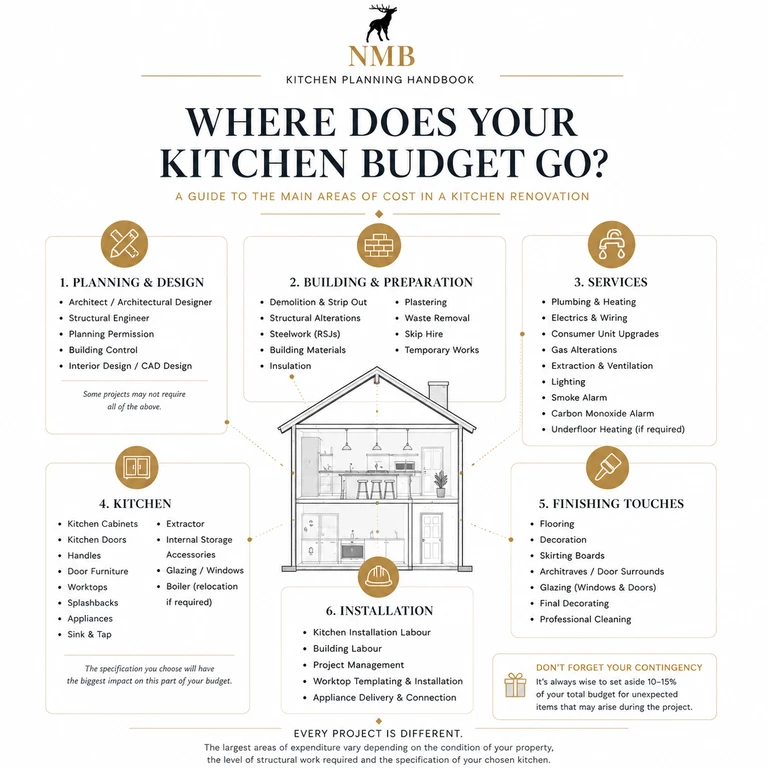
Every renovation is unique. Some projects may require only a selection of the items shown above. While others may involve additional work depending on the age, condition and layout of the property. Your final budget should always reflect the specific requirements of your home and meet the local regulations and guidance.
As the illustration above shows, the cost of a complete kitchen renovation extends far beyond the furniture itself.
Some homes require very little preparation before installation begins, while others may involve removing internal walls, upgrading electrics, replacing plumbing, installing new flooring or complying with Building Control requirements.
The exact balance will be different for every home, but understanding these categories from the outset helps you build a more realistic budget and reduces the likelihood of unexpected costs further into the project.
Rather than asking, “How much does a kitchen cost?” a better question is:
“What work does my renovation actually involve?”
That simple change in thinking can make budgeting far easier and help you plan your investment with greater confidence.
Do Not Underestimate Hidden Costs
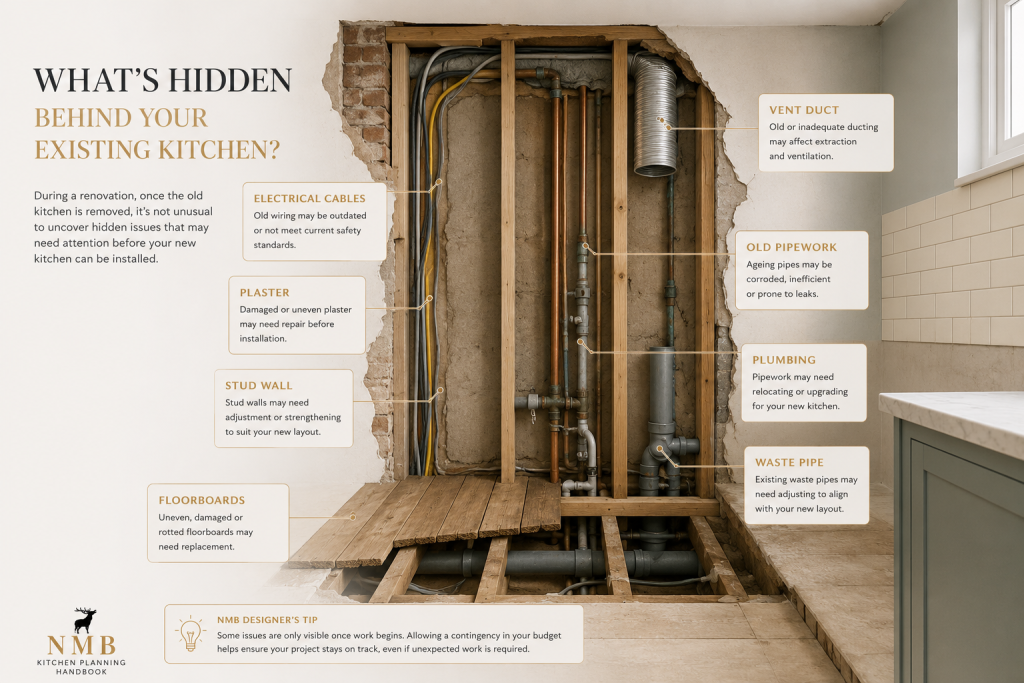
One of the biggest challenges when renovating a kitchen is that some problems are hidden. You often don’t find them until you remove the old kitchen.
Behind the cabinets, beneath the flooring and inside the walls, there may be issues that have remained hidden for many years. In most homes, nothing unexpected is discovered. However, especially in older homes, it’s common to find work that needs fixing before your new kitchen is installed.
Older Homes Often Need a Little More Attention
If you’re renovating a Victorian, Edwardian, or 1930s home, remember that many services may have changed over time. This could be done either by the homeowners or qualified tradespeople.
Previous extensions, DIY improvements and historic repairs can all influence what is discovered once work begins.
This does not mean older homes are more difficult to renovate. In fact, they often create the most characterful kitchens. However, it does reinforce the importance of allowing for a sensible kitchen renovation contingency fund. Doing your own due diligence to work with experienced professionals who are comfortable adapting to what they find.
While these findings can affect the overall budget. They are often an opportunity to improve the safety, reliability and longevity of your home. Addressing them during a renovation is usually far easier and more cost-effective. Than discovering them after your beautiful new kitchen has already been fitted. Some of the more common discoveries include:
- Outdated or overloaded electrical wiring.
- Damaged or uneven plasterwork.
- Uneven subfloors requiring levelling.
- Ageing plumbing or leaking pipework.
- Rotten floorboards or signs of damp.
- Structural alterations carried out by previous owners.
- Chimney breasts or redundant pipework hidden behind units.
- Missing or inadequate support where walls have previously been removed.
Every property is different, which is why it’s impossible to predict every eventuality before work begins. The key is to leave some room in your budget.Work with a company that communicates clearly.They should let you know if anything unexpected comes up.
NMB Designer’s Tip
The cheapest quotation is not always the least expensive renovation.
Some quotations only include the work that can be seen during the initial survey. Others take the time to discuss potential risks from the outset and explain how they would be handled if they arise.
At NMB, we would rather have an honest conversation before work begins. That way we can present unexpected costs before your kitchen has already been removed. Having worked on many property types across Manchester, we know areas where issues may arise. We will always be honest and, where possible, investigate during the quoting stage. This may mean opening up a small section of the ceiling – flooring to check. Do not worry, we will clean up afterwards!
What's Hidden Behind Your Existing Kitchen?
Spend Once - Enjoy Every Day
One of the biggest misconceptions about kitchen renovation budgeting is that spending more automatically creates a better result.
In reality, the most successful kitchen renovations are rarely the ones with the biggest budgets. They are the ones where the investment has been focused on the features that improve everyday life.
When planning your budget, ask yourself one simple question: “Will I notice and appreciate this every day for the next 15 or 20 years?” If the answer is yes, it’s often worth investing a little more.
A well-designed layout makes cooking easier. Robust cabinets still feel solid years later. Carefully planned lighting transforms the room’s mood. Durable worktops stand up to everyday family life. These features deliver value long after the excitement of a new kitchen fades.
On the other hand. It is easy to be drawn towards the latest smart appliances or premium features. You know the ones that sound impressive in a showroom but are rarely used once everyday life takes over.
That is not to say these products are not worthwhile. If they will genuinely enhance the way you use your kitchen. The key is making conscious decisions based on your own lifestyle rather than simply choosing the highest specification available.
Ultimately, a beautiful kitchen is not created by spending the most money. It is created by investing in the things that matter most to you.
NMB Designer's Tip
Every pound does not have to be spent today. Some finishing touches, accessories and decorative features can always be added in the future. Good layout, quality installation and durable cabinetry are far more difficult. Ultimately more expensive to change once your kitchen is complete.
People rarely regret investing in a better layout or higher-quality cabinetry. They far more often regret the compromises they notice every single day. Before deciding where to reduce your kitchen renovation budget, have in mind this thought:
Which parts of your kitchen will you interact with every single day? For example, you will open your drawers hundreds of times each week. Prepare meals on your worktops. Switch your lights on every morning and walk across your flooring countless times over the years. These everyday experiences often have a greater impact on your enjoyment of the space. Than the features that simply look impressive on a specification sheet.
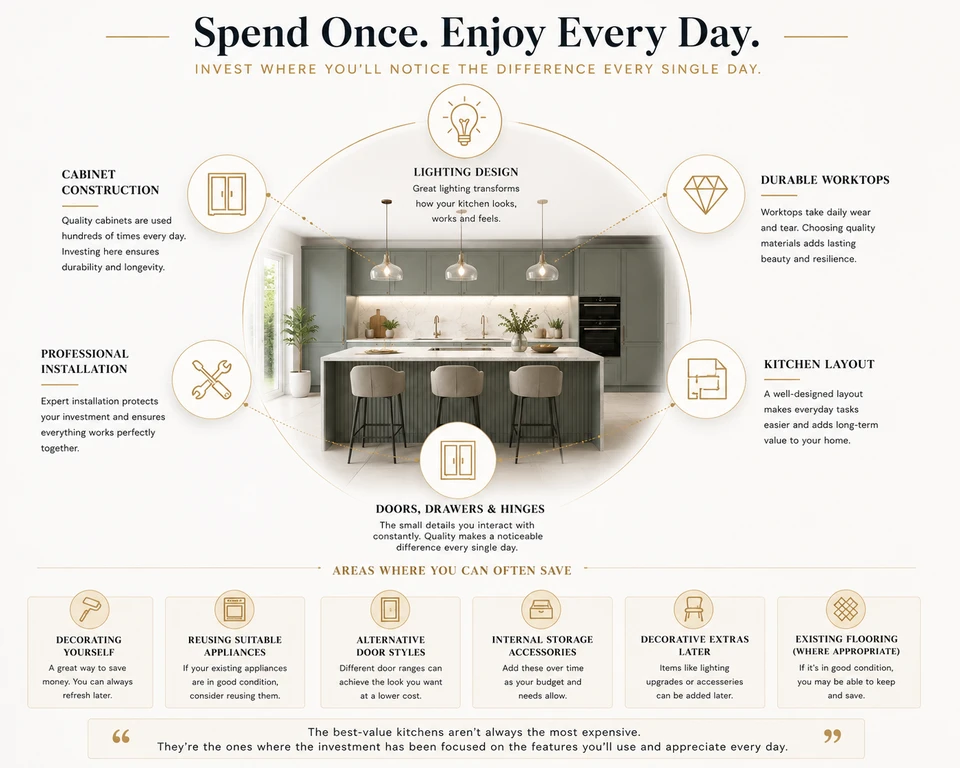
How to Reduce Costs Without Reducing Quality
Every kitchen renovation has a budget, and very few homeowners have unlimited funds.
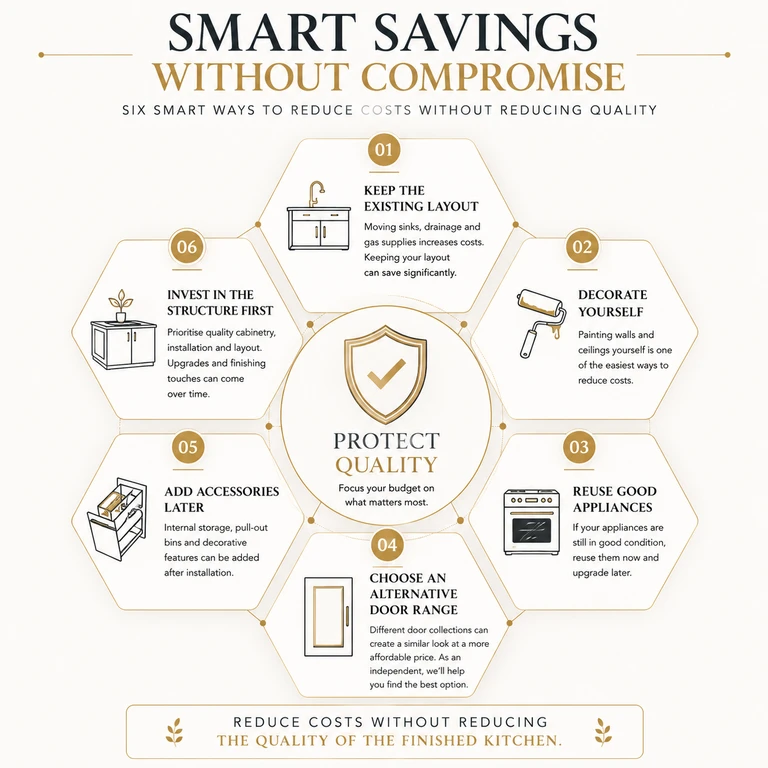
The good news is that reducing costs does not necessarily mean compromising on the finished result. With careful planning, it is often possible to achieve the same overall look and functionality while making sensible decisions about where to spend and where to save.
The key is understanding which elements are difficult to change once your kitchen has been installed. In addition, those which can be easily be upgraded in the future. By prioritising the features that have the greatest impact on everyday life, you can create a beautiful kitchen that feels considered, practical and built to last without exceeding your budget.
Smart Ways to Reduce Costs
NMB Designer's Tip
Think in phases, not compromises.
A kitchen does not have to include every optional extra on day one. Focus your budget on creating a strong foundation, then add finishing touches as your needs and budget evolve.
Reducing costs should not mean lowering your expectations. Instead, think of your budget as a series of priorities. Choose to invest in the elements that affect the way your kitchen looks, functions and lasts. By making thoughtful savings elsewhere, it is possible to create a space you will enjoy for many years without compromising on quality.
A well-planned kitchen budget is not about spending less. It is about spending intelligently.
Keep a Contingency Fund In You Kitchen Renovation Budget
No matter how carefully you plan, every renovation has the potential to uncover something unexpected. It might be outdated wiring hidden behind old cabinets. Uneven flooring revealed once the existing kitchen has been removed. Ageing plumbing that no longer meets current standards or structural work that was not visible during the initial survey.
These discoveries do not necessarily mean something has gone wrong. In fact, they’re often a normal part of renovating an existing home. The important thing is to be prepared.
Setting aside a contingency fund gives you the flexibility to deal with unforeseen issues without compromising the overall project. Instead of making rushed decisions or cutting your new kitchen plan mid-renodel, you can move forward with confidence. You’ll know you planned for the unexpected.
Many renovation professionals recommend allowing around 10–15% of your overall project budget as a contingency, although the appropriate amount will depend on the age of your property, the condition of the existing services and the complexity of the work being undertaken.
If your renovation is straightforward and everything goes to plan, that’s excellent news. Any unused contingency simply remains yours. But if unexpected work is required, having that financial buffer can make the difference between a smooth renovation and a stressful one.
Think of it less as an additional cost and more as peace of mind.
Plan For The Unexpected

Peace of Mind Is Part of the Budget
One of the greatest benefits of careful budgeting isn’t simply knowing how much your project is likely to cost. It’s having the confidence to move forward knowing you’ve considered the unexpected and planned accordingly.
A realistic budget doesn’t remove uncertainty altogether, but it does help ensure that unexpected discoveries don’t become unexpected crises.
By allowing for a sensible contingency from the outset, you can make decisions calmly, keep your project moving and focus on creating a kitchen you’ll enjoy for many years to come.
A realistic budget is not about limiting your choices. It is about giving yourself the confidence to make the right ones.
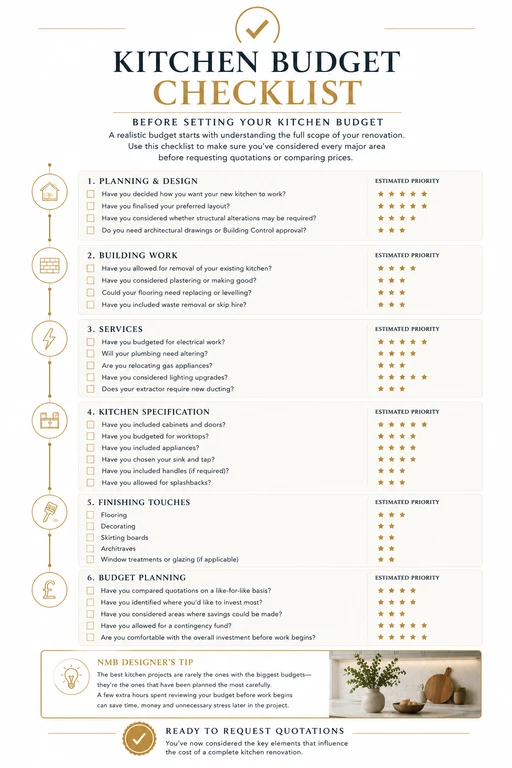
By tracking where your money goes, you can plan for surprises. You can also focus on the most important features. This will help you build a kitchen that adds value long after the renovation ends. A well-planned budget is not simply a financial plan. It is the foundation of a successful kitchen renovation. To request a copy of the Kitchen Renovation Budget checklist, use the contact form and state Kitchen Budget Checklist.
Every Home Is Different
By now, you will hopefully have realised that there is not a “correct” kitchen renovation budget. Two homeowners with identical-sized rooms may invest very different amounts. This does depend on the level of structural work required, the quality of finishes they choose and how they want to use the space.
Rather than aiming for an average figure, it is far more useful to understand what your own renovation involves. A kitchen that keeps its current layout will cost less than one that changes it. The second kitchen may need a wall removed and require a new floor. The client may choose custom cabinets and purchase premium appliances.
The most successful projects begin with clear priorities rather than a fixed number. Once you understand the scope of the work and where you’d like to invest. It is much easier to build a realistic budget that reflects your home, your lifestyle and your long-term plans.
Here at NMB, we ask our clients to share the precise appliance model numbers and dimensions in advance. This enables us to verify that cabinetry, utilities, and adjacent clearances properly fit the planned layout.
It can also reduce the risk of discovering during installation that an appliance is unavailable. This may then result in additional delays and other knock-on effects. It also limits the risk that the appliance does not fit or requires a supply that has not been installed during first fix. Ultimately, this may cost you more money and extend the project time. An experienced kitchen fitter will ask you up front for these measurements and expected timeframes for delivery.
Continue Your Kitchen Planning Journey
Planning a new kitchen is about making a series of informed decisions, one step at a time. Now you know how to build a realistic kitchen renovation budget. Keep exploring the next steps in your kitchen planning journey. Use our expert guides.
Planning a New Kitchen → Read Chapter 1
[Learn how to define your priorities, assess your space and create a kitchen that works beautifully for your home and lifestyle.]
How Much Does An Average New Kitchen Cost? → View Kitchen Cost Guide
Choosing the Right Kitchen Layout → Coming Soon
[Discover the strengths of galley, L-shaped, U-shaped and island kitchens, and learn how to choose the layout that best suits your home.]
Planning a Kitchen in Greater Manchester?
At NMB Kitchens & Bathrooms, we believe every successful renovation begins with careful planning. That’s why we’ve created the NMB Kitchen Planning Handbook—a growing collection of expert guides designed to help homeowners make informed decisions with confidence.
Whether you’re choosing a layout, setting a realistic budget, comparing kitchen ranges or planning a complete renovation, our aim is simple: to provide clear, honest advice based on decades of real-world experience.
Why Homeowners Choose NMB
✓ Complimentary home design consultation
✓ Bespoke kitchen design tailored to your home
✓ Complete design, supply and installation service
✓ Structural alterations and full project management
✓ Trusted by homeowners across Greater Manchester
NMB Handbook Chapters
✓ Guide 1 – Planning a New Kitchen
✓ Guide 2 – Setting a Realistic Kitchen Budget
○ Guide 3 – Design A Kitchen Around How You Live (Coming Soon)
○ Guide 4 – Kitchen Storage Solutions (Coming Soon)
○ Guide 5 – Kitchen Worktops (Coming Soon)
○ Guide 6 – Kitchen Colours (Coming Soon)
○ Guide 7 – Kitchen Lighting (Coming Soon)
○ Guide 8 – Kitchen Appliances (Coming Soon)
○ Guide 9 – Choosing a Kitchen Company (Coming Soon)
○ Guide 10 – Preparing for Installation (Coming Soon)
Want To Know More About Who We Are ? We - Design, Supply & Install
Why Not Explore Our Recent Projects
Why Choose An Independent Kitchen Company?
Ready to Start Planning?
If you would like professional advice tailored to your home, we are always happy to help. Every project begins with a friendly design consultation where we will discuss your ideas. Answer your questions and provide honest guidance with no pressure or obligation.