

How Long Does It Take To Fit A Kitchen?
Understanding Realistic Kitchen Renovation Timelines
One of the most common questions we are asked is: how long does it take to fit a kitchen?
There is no single answer because every kitchen project is different.
A straightforward kitchen replacement, where the existing layout and services remain largely unchanged, will usually be completed more quickly than a full renovation involving structural alterations, plastering, flooring, electrics or major plumbing changes.
Larger projects such as open-plan kitchen diners, utility rooms and renovations involving steelwork or several different trades naturally require more time and coordination.
The kitchen installation itself is only one part of the overall project. Surveys, design work, appliance choices, material lead times and the sequencing of trades can all affect the programme.
Once the design, specification and full scope of work are agreed, we will explain the expected kitchen installation timeline for your individual project before work begins.
In this guide, we explain the typical stages involved in fitting a new kitchen, what can affect the timescale and how good planning can help avoid unnecessary delays.
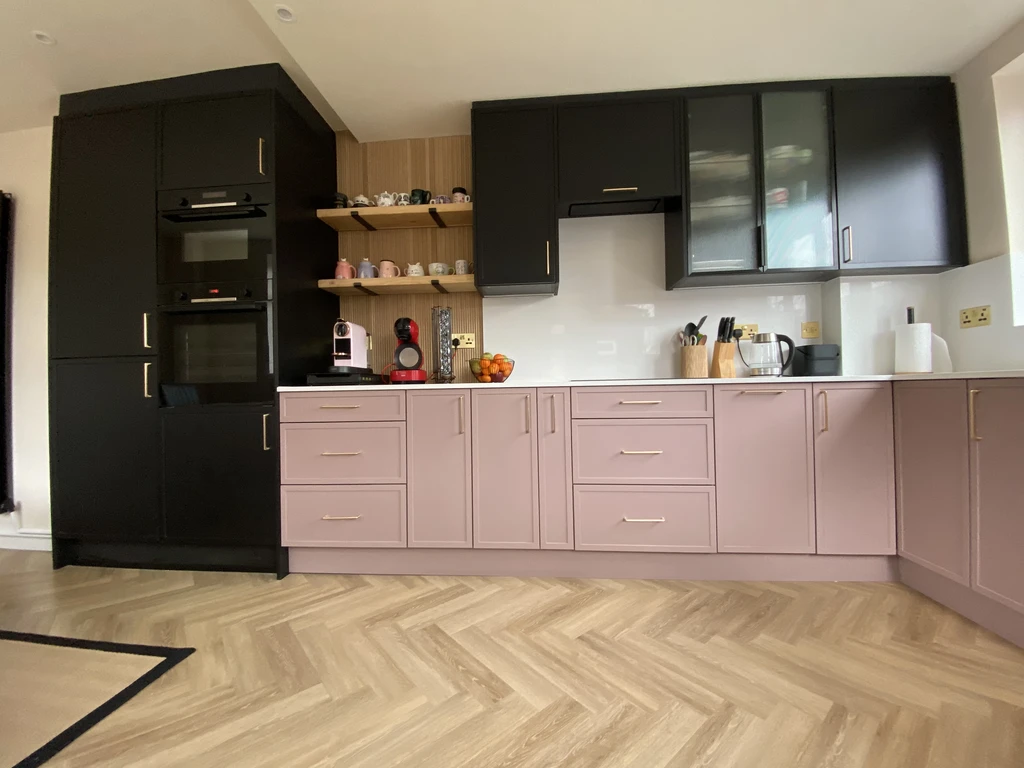
About Us - Design, Supply & Install
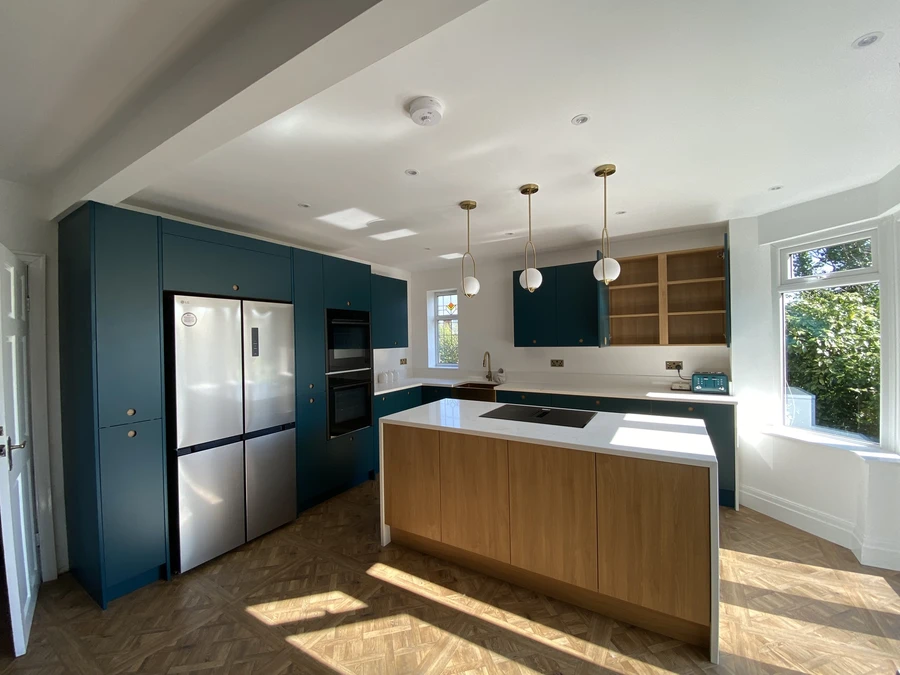
Our Works
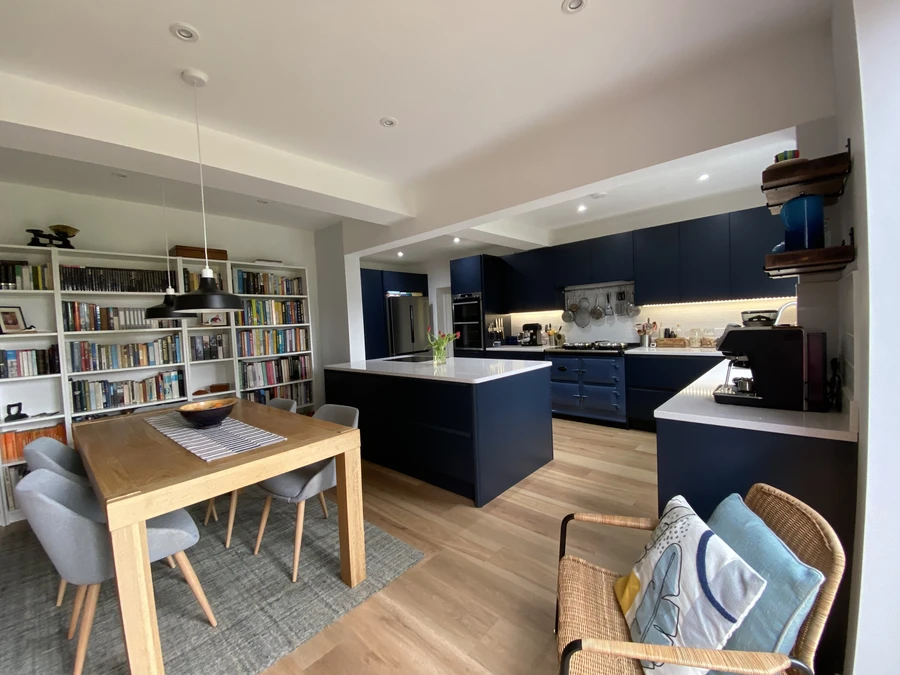
Why Choose An Independent Kitchen Company?
Contents Of Our Guide
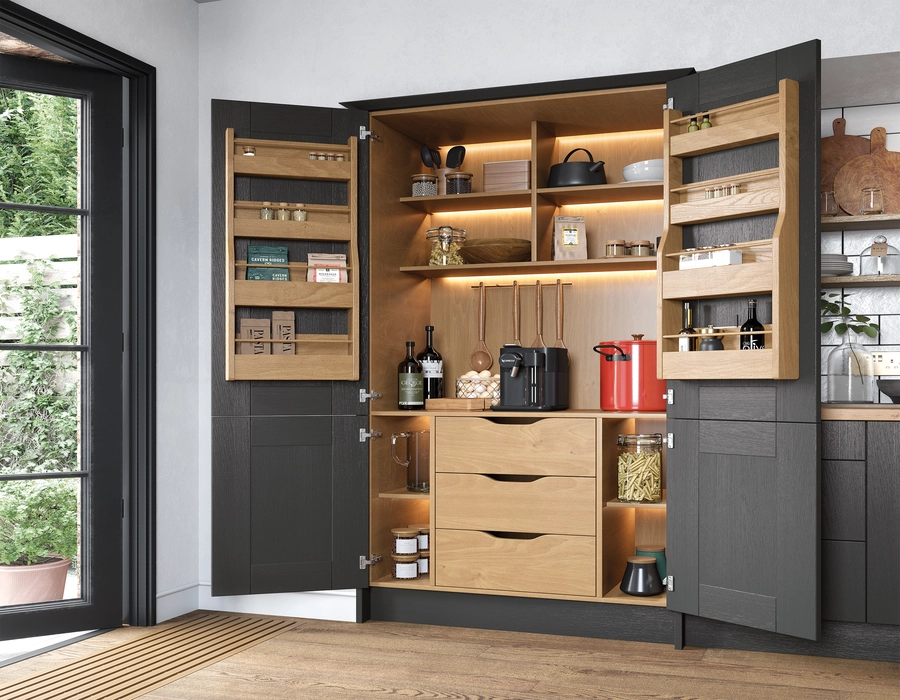
How Long Does It Actually Take to Fit a Kitchen?
There is no single installation timescale that applies to every kitchen.
A straightforward replacement, where the existing layout and services remain largely unchanged, will usually be completed more quickly than a full kitchen renovation.
Projects involving open-plan alterations, utility rooms, structural steelwork, rewiring, plastering, flooring or substantial plumbing changes naturally require more time because several stages and trades need to be coordinated.
Worktop choice can also affect the programme. Quartz, granite and other templated surfaces are normally measured after the kitchen units are installed and then manufactured before final fitting.
Material lead times can also play a part, particularly for painted doors, bespoke cabinetry, appliances, windows, doors and structural steel.
Once your design, specification and full scope of work are agreed, we will explain the expected kitchen installation timeline for your individual project before work begins.
The Planning & Design Stage
A successful kitchen renovation starts long before the first cabinet is installed. The process usually begins with a home visit, where we take detailed measurements, discuss how you want the space to work and assess the existing plumbing, electrics and any structural considerations that could affect the project.
We then prepare CAD plans and develop the proposed layout with you. Appliance choices, lighting, storage, worktops and finishes are all considered at this stage because they can affect cabinet sizes, electrical positions, plumbing and the overall installation programme.
Once the design and specification are sufficiently agreed, we prepare a detailed itemised quotation for the project.
Before the kitchen is ordered, measurements and key details are checked again so that the final plans, appliances and materials are confirmed before installation begins.
Good planning at this stage helps reduce last-minute changes, delays and unexpected costs once work starts on site.
- Appliance choices can affect cabinet sizing
- Extractor positions can affect ducting routes
- lighting layouts affect electrical planning
- Flooring thickness can affect finished kitchen heights
- Structural work may require additional preparation or steelwork
One of the most common causes of delays is homeowners not finalising appliances or design decisions early enough. Certain appliances, bespoke cabinetry, painted kitchen ranges, quartz worktops, windows, doors and steelwork can all come with lead times that need factoring into the schedule.
Before installation begins, Nev will also typically carry out another survey to recheck measurements and confirm that everything is correct before kitchens, worktops and materials are ordered for site.
Good planning at this stage helps keep the entire project running smoothly once the renovation is underway. View some of our recent Manchester kitchen projects.
A Typical Kitchen Renovation Timeline
While every project is different, most kitchen renovations follow a similar sequence of work.
A straightforward replacement will usually involve fewer stages than a larger renovation with structural alterations, multiple trades or changes to the room itself.
A typical project may include:
1. Initial Survey & Design Consultation
We visit your home to take measurements, review the existing space and discuss how you want the new kitchen to work.
2. CAD Plans & Design Development
We prepare CAD plans and refine the layout, finishes, appliances and practical details with you.
3. Final Design Approval & Quotation
Once the design and specification are sufficiently agreed, we prepare a detailed itemised quotation and confirm the scope of work.
4. Pre-Installation Check
Measurements, appliance details and key site information are checked again before the kitchen and materials are ordered.
5. Removal of the Existing Kitchen
The old kitchen and any agreed finishes or flooring are removed so the room can be prepared for the new installation.
6. Structural & Building Work
Where required, wall removal, steelwork, openings, utility-room alterations and other building work are completed at this stage.
7. First-Fix Plumbing & Electrics
New plumbing, wiring, sockets, lighting positions and extraction routes are installed before the room is finished.
8. Plastering & Preparation
Walls and ceilings are repaired, prepared and plastered where required.
9. Flooring
Flooring may be installed before or after the kitchen depending on the material, design and installation requirements.
10. Kitchen Installation
Cabinets, panels, appliances and associated joinery are fitted and adjusted into position.
11. Worktop Templating
Quartz, granite and other templated worktops are usually measured once the kitchen units are securely installed.
12. Worktop Installation
The worktops are manufactured and fitted before the final plumbing and electrical connections are completed.
13. Second-Fix Plumbing & Electrics
Sinks, taps, appliances, lighting and final electrical connections are completed.
14. Finishing & Snagging
Final adjustments, finishing work and snagging are completed before the project is handed over.
Some homeowners also choose to arrange their own decorating or specialist flooring contractors separately, particularly for more bespoke finishes or accredited flooring systems.
Common Reasons Kitchen Projects Get Delayed
Even with careful planning, kitchen renovations can occasionally take longer than expected.
The important thing is identifying likely problems early and coordinating the work properly.
Changes to the design after work starts
Changing layouts, finishes or appliance choices after installation has begun can affect cabinet sizes, electrical positions, plumbing, worktops and delivery schedules.
Finalising these decisions before work starts helps avoid unnecessary delays.
Appliance and material lead times
Appliances, painted doors, bespoke cabinetry, quartz worktops, steelwork, windows and specialist materials can all have lead times.
Checking availability early helps keep the programme on track.
Hidden issues after the old kitchen is removed
Older properties can sometimes reveal unexpected problems once the room is opened up.
These may include:
- damaged plaster
- uneven walls or floors
- outdated electrics
- old pipework
- hidden structural issues
Where possible, we try to identify likely problems during the survey stage so they can be allowed for before work begins.
Structural and flooring preparation
Structural alterations, steelwork, floor levelling and drying times can all add time to the programme.
The amount of preparation required depends on the condition of the property and the scope of the renovation.
Coordinating multiple trades
Kitchen renovations often involve electricians, plumbers, plasterers, flooring installers, worktop suppliers and kitchen fitters.
These stages need to happen in the correct order, so good project management is important.
Living without a kitchen
A full kitchen renovation can be disruptive, particularly on larger projects.
Planning temporary cooking arrangements and thinking ahead about day-to-day living can make the process much easier.
Good preparation before work begins can make a major difference to how smoothly the renovation runs.
Why Good Project Management Matters
A kitchen renovation involves much more than fitting cabinets. On many projects, several trades, deliveries and suppliers need to be coordinated in the correct order. Structural work, plastering, flooring, plumbing, electrics, worktops and appliances can all affect the overall programme.
Poor planning at the beginning of a project can lead to delays, confusion and unexpected costs later on.
At NMB Kitchens & Bathrooms, we prefer to manage the full renovation process wherever possible rather than simply supplying the kitchen and leaving homeowners to organise the rest themselves. Because of our building background, we are comfortable managing more complex projects involving structural alterations, kitchen-diner knock-throughs, utility rooms and full renovations.
Having one main point of contact also makes communication easier. Questions can be answered quickly, trades can be coordinated properly, and issues can often be dealt with before they become larger problems.
Good project management does not mean that nothing unexpected will ever happen, but it does help keep the renovation organised, transparent and moving in the right direction.
kitchen renovation projects across Manchester
Final Thoughts - Key Takeaways
There is no single answer to how long it takes to fit a kitchen because every project has a different scope.
A straightforward replacement will usually be completed more quickly than a renovation involving structural alterations, new flooring, plastering, utility rooms or several different trades.
The biggest factors affecting the installation programme are usually:
- how much building work is required
- whether the layout is changing
- appliance and material lead times
- worktop templating
- plastering and drying times
- coordination between trades
- how early the design and specification are finalised
In our experience, the best way to keep a kitchen renovation running smoothly is to agree as much as possible before work starts.
Good planning, clear communication and realistic expectations usually make a much bigger difference than trying to force every project into a fixed number of weeks.
How long does it take to fit a kitchen?
Kitchen installation times vary because every project is different, so there is no single answer to how long it takes to fit or install a new kitchen.
A straightforward replacement with no structural changes will usually be quicker than a project involving minor structural alterations.
Major renovations, such as open-plan kitchens, utility rooms, structural steelwork, extensive plastering, electrics, flooring or templated worktops, naturally take longer.
Once the design and full scope are agreed, we will explain the expected programme for your individual project before work begins.
How long does it take to remove an old kitchen?
A straightforward kitchen removal is usually one of the quicker stages of the project.
The time required depends on the size of the kitchen, how it has been installed and whether the removal uncovers additional work that needs attention.
If structural changes are involved, the strip-out stage can take longer because walls, services and making-good work may also need to be coordinated.
Can I live at home while my kitchen is being fitted?
Yes, many homeowners stay in the property while their kitchen is being renovated.
There will naturally be some disruption while the kitchen is out of use, so it is worth planning temporary cooking arrangements in advance.
We keep the site as organised and tidy as possible and will explain the likely disruption before work begins.
What part of a kitchen renovation usually takes the longest?
This depends on the project. The stages that can add the most time are often structural work, plaster drying, coordinating multiple trades and waiting for templated worktops to be manufactured and fitted.
A well-planned project helps reduce delays because the design, appliances, services and sequence of work are agreed before installation starts.
When should appliances be ordered for a new kitchen?
Appliances should ideally be chosen and confirmed before the kitchen is ordered and installation begins.
This allows the cabinet sizes, appliance housings, electrics, plumbing and ventilation requirements to be planned correctly.
Confirming appliances early also reduces the risk of delays or last-minute changes once the kitchen is being fitted.
Does plastering and flooring happen before the kitchen is fitted?
In most projects, first-fix electrical and plumbing work and plastering are completed before the kitchen units are installed.
The timing of flooring depends on the material and the design.
Some floors are laid before the kitchen, while others are fitted afterwards.
We plan the sequence around the type of flooring being used and the requirements of the individual project.
How long does a kitchen diner knock-through take?
A kitchen diner knock-through usually takes longer than a straightforward kitchen replacement because it involves structural work as well as the kitchen installation.
The programme can include wall removal, structural steelwork, Building Control inspections, making good, plastering, electrics, plumbing and the kitchen fit itself.
Rather than using a fixed number of weeks, we confirm the expected programme once the structural requirements and full scope of work are known.
What should I confirm before kitchen fitters start?
Before installation begins, make sure the final kitchen layout, appliances, worktops and specification are agreed.
It is also useful to confirm:
- access arrangements
- appliance details
- any plumbing or electrical changes
- flooring and decorating plans
- who is responsible for each part of the project
- the expected installation programme
Having these details agreed in advance helps reduce delays and last-minute changes.
Ready to start your kitchen project?
We design, supply and install kitchens across Manchester with full project management from start to finish.
Free home visit with no obligation
Bespoke kitchen & bathroom designs tailored to your space
Full project coordination from initial design to completion
Structural alterations and building work covered
Trusted, local team with consistently positive client feedback